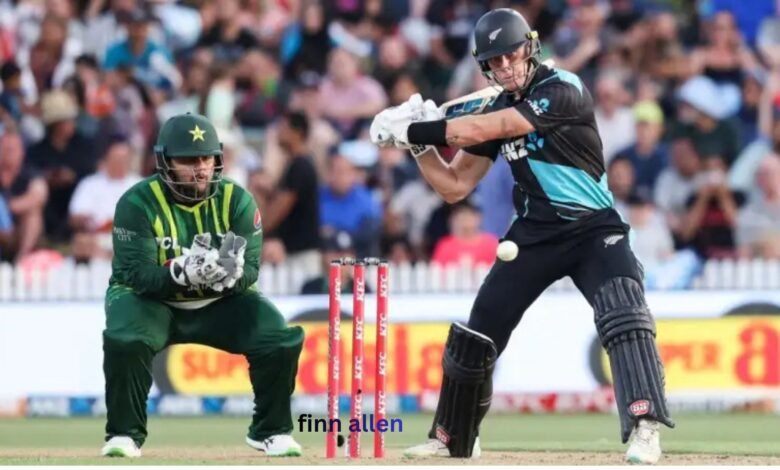
Cricket fans often talk about explosive openers, but very few players genuinely change the feel of the first six overs like Finn Allen. If you’ve ever watched a T20 match where the game suddenly feels out of control within two overs, there’s a good chance Finn Allen was involved. His batting style raises a common question for viewers and analysts alike: is he a match-winner who can redefine modern powerplay batting, or a high-risk opener who lives on the edge?
This article breaks down Finn Allen’s game in a practical, easy-to-understand way. Instead of generic praise, we’ll look at how he actually scores runs, why teams keep backing him despite inconsistency, and what makes his approach so different from traditional openers. You’ll also learn how his technique, shot selection, and mindset affect real match outcomes.


Whether you’re a casual cricket viewer, a fantasy cricket player, or someone trying to understand modern T20 strategy, this guide will help you see Finn Allen’s batting in a clearer, more analytical way—beyond just highlights and strike rates
Who Is Finn Allen and Why Does He Matter?
Finn Allen is a New Zealand top-order batter known for one primary skill: explosive starts. Unlike traditional openers who build innings, Allen is designed to attack from ball one. His role is simple but high-pressure—maximize runs in the powerplay, even at the cost of early dismissal.
What makes him interesting is not just his aggression, but how consistent teams are in selecting him despite volatility. In modern T20 cricket, this type of player is becoming more valuable because:
- Powerplay runs are statistically the most influential phase
- Field restrictions reward high-risk batting
- Teams now prefer “impact per ball” over long innings stability
Allen fits perfectly into this evolution of T20 thinking.
Understanding Finn Allen’s Batting Style
1. The “First-Three-Overs Strategy”
Allen’s approach is unusually clear: he tries to dominate early, especially in the first 18–24 balls he faces. Instead of settling in, he often plays attacking shots immediately—cover drives, lofted straight hits, and aggressive pulls.
This creates a pattern:
- High scoring rate in overs 1–3
- Increased dismissal risk between balls 6–15
- Either a rapid 30–50 or a very short innings
This is not a flaw in traditional terms—it is a strategic trade-off.
2. Strength: Straight and Off-Side Power
One of Allen’s most effective scoring zones is straight down the ground. His bat swing is naturally clean, allowing him to hit:
- Straight sixes over mid-off
- Lofted drives over extra cover
- Flat-batted shots back over the bowler
This makes him especially dangerous on true pitches where bounce and pace are predictable.
3. Weakness: Short Ball Under Pressure
A less discussed but important aspect of Allen’s game is his vulnerability to short-pitched bowling when the ball is angled into the body early in his innings. Fast bowlers often test him with:
- High bounce at the ribcage
- Hard-length cutters into the pitch
- Wide short balls to force mistimed hooks
When he survives this phase, his scoring rate typically increases dramatically.
Why Teams Still Trust Him Despite Inconsistency
Many fans assume inconsistency is a problem, but modern T20 franchises view players like Allen differently. His value is measured in “impact windows.”
Key Insight 1: Powerplay Damage vs Entire Innings Value
A common misunderstanding is judging openers on average alone. But Allen’s impact comes from:
- 30 runs in 12 balls = match-changing start
- Even if he gets out early, he has already shifted pressure
This “pressure transfer effect” is why he continues to be selected.
Key Insight 2: Bowling Plans Change Because of Him
Opposition teams often adjust their entire strategy when Allen is at the crease:
- Opening bowlers avoid predictable lengths
- Fielding sides set defensive boundaries earlier than usual
- Spinners are sometimes held back longer
Even before scoring heavily, he influences decision-making.
Technical Breakdown: How Finn Allen Builds Runs
1. Stance and Trigger Movement
Allen’s stance is slightly open, which helps him access the off-side. His trigger movement is minimal—he prefers staying still and reacting quickly rather than large back-and-across movements.
This is why he excels against pace early on: less movement equals faster shot execution.
2. Bat Speed and Timing Window
One of his strongest attributes is bat speed. Even mistimed shots can travel long distances due to:
- Fast swing through the line
- Strong wrist control
- Early contact point
This reduces the need for perfect timing every ball.
3. Preference for Vertical Bat Shots
Unlike some T20 batters who rely heavily on horizontal bat strokes (cuts and pulls), Allen prefers vertical bat shots:
- Straight drives
- Lofted on-drives
- Inside-out shots over cover
This reduces risk slightly on good-length deliveries.
Tactical Role in Modern T20 Cricket
Allen represents a broader shift in cricket strategy.
1. The “Launchpad Opener” Role
Instead of anchoring, his job is to:
- Score quickly before field restrictions end
- Force opposition bowlers to defensive lines
- Create momentum for middle-order hitters
Teams now often pair him with more stable batters to balance risk.
2. Ideal Conditions for Success
Allen performs best when:
- Pitch has even bounce
- Outfield is fast
- Boundary sizes are short or average
- There is minimal swing movement early
He struggles more in conditions with:
- Heavy seam movement
- Slow, sticky pitches
- Extreme bounce variation
Common Misconceptions About Finn Allen
Misconception 1: “He is inconsistent and unreliable”
Reality: He is intentionally high-variance. His role is not stability but acceleration.
Misconception 2: “He cannot adapt”
Reality: He has shown improvement in shot selection, especially in franchise cricket, by:
- Delaying aerial shots by a few balls
- Targeting weaker bowlers more strategically
- Reducing risk against high-quality new-ball spells
Misconception 3: “He only plays one way”
Reality: While aggressive by nature, he adjusts tempo depending on match situation, especially in chase scenarios where required rate dictates approach.
Unique Insights Most Analyses Miss
Insight 1: Psychological Pressure Shift
Allen’s batting style creates an unusual psychological effect. Even when he fails, bowlers feel they “escaped” danger rather than dominated him. This subtle mental shift benefits his team in later overs.
Insight 2: Early Dismissal Can Still Be Successful
Unlike traditional thinking, a quick dismissal after scoring 20–30 runs may still be a positive outcome for his team because:
- It ensures high strike rate opening overs
- It brings more stable middle-order batters in earlier under better conditions
- It disrupts opposition bowling rhythm
Insight 3: Franchise vs International Role Difference
Allen often performs differently depending on context:
- In franchise cricket: more freedom, higher strike output
- In international cricket: slightly more structured role, more pressure on consistency
This difference is important when evaluating his overall performance fairly.
Practical Takeaways for Fans and Analysts
If you’re analyzing Finn Allen in future matches, focus on:
- First 10 balls faced (most predictive of match impact)
- Bowling type in powerplay (pace vs swing)
- Field setting aggression (deep vs attacking)
- Shot selection balance (aerial vs grounded early)
These indicators reveal more than final score alone.
FAQs
1. What makes Finn Allen different from other openers?
Finn Allen is different because he prioritizes scoring speed over innings stability. His goal is to maximize powerplay runs rather than build long innings, which is uncommon in traditional opening roles.
2. Why does Finn Allen get out early so often?
He takes high-risk shots early in his innings to exploit field restrictions. This approach increases scoring opportunities but also raises dismissal chances, especially against quality pace bowling.
3. Is Finn Allen good for fantasy cricket?
Yes, but he is high-risk. He can deliver very high points in short bursts, but he may also score very low in some matches. He is best used in aggressive fantasy strategies.
4. What are Finn Allen’s strongest shots?
His strongest shots include straight drives, lofted cover drives, and powerful on-side hits. These shots are most effective when he gets early rhythm.
5. Can Finn Allen improve his consistency?
Yes, but it would likely require reducing early aggression slightly. However, that may also reduce his main strength—fast scoring in the powerplay.
6. Why do teams continue to select him?
Teams select him because his impact in the first six overs can change match dynamics instantly. Even short innings can create a strong foundation for the rest of the batting lineup.
Conclusion
Finn Allen represents the modern evolution of T20 opening batting—fast, aggressive, and high-impact. His value cannot be measured only by averages or consistency. Instead, it lies in how quickly he can change a game’s momentum within a few overs.
Understanding his role helps fans appreciate why teams continue to invest in high-risk openers in modern cricket. He may not always deliver long innings, but when he clicks, the match often shifts in a matter of minutes.