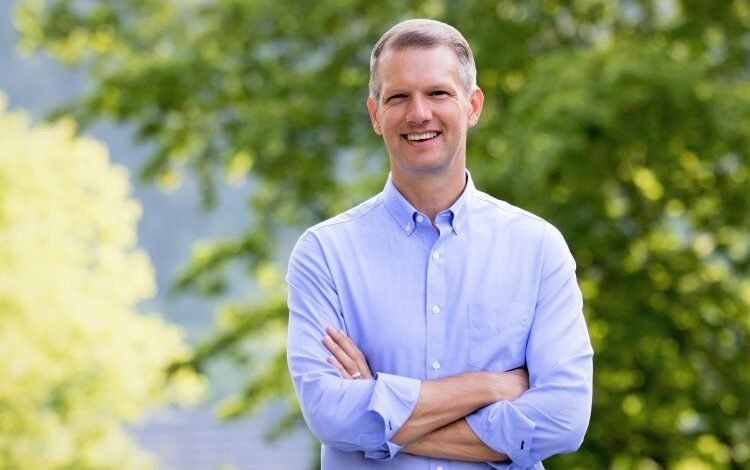
In contemporary American politics, few figures illustrate the blend of legacy, dedication, and evolving public influence as Riley Moore. From his early career and education to his current role in the U.S. House of Representatives, Moore’s journey reflects both personal ambition and broader shifts in political landscapes. His story is not simply about titles held or offices occupied; it’s about how a public servant navigates the demands of leadership, the pressures of governance, and the responsibilities of representing constituents in a complex era.
Born on July 1, 1980, in Morgantown, West Virginia, Riley McGowan Moore’s early life already foreshadowed a deep engagement with public service. Politics was familiar territory, given his family’s longstanding involvement in the political realm. His grandfather, Arch A. Moore Jr., served as governor of West Virginia and also represented the region in Congress, while his aunt, Shelley Moore Capito, is a U.S. Senator. This familial context offered both inspiration and a framework for understanding civic duty from a young age.


Moore’s path, however, was not a predetermined succession. Rather than move directly into politics without diverse real-world experience, he pursued both technical and academic development. Early on, he earned a welding certificate from the C.S. Monroe Technology Center, giving him firsthand experience in industrial work that grounded his perspective on labor and economic opportunity.
He later advanced his education with a bachelor’s degree in government and international politics from George Mason University, followed by a master’s degree in strategic security studies from the National Defense University. This blend of practical and academic experience would become a hallmark of his approach to public service—balancing tangible concerns with informed policy thinking.
The Political Path of Riley Moore
The political career of Riley Moore began at the state level, where he quickly made a mark as a young and energetic voice within the Republican Party in West Virginia. In 2016, he was elected to the West Virginia House of Delegates representing the 67th District, where he served as assistant majority whip and demonstrated early leadership potential.
Although he lost his reelection bid in 2018, Moore did not step back from public involvement. Instead, he shifted his focus to broader state leadership. In 2020, he successfully ran for West Virginia State Treasurer, defeating the incumbent with a strong campaign focused on fiscal accountability and progressive ideas for state economic growth. During his tenure, he prioritized transparency, returning millions of dollars to taxpayers and advocating for improved financial management within state government.
This period as treasurer provided Moore with essential experience in overseeing public funds and engaging with economic issues at a practical level. It also expanded his visibility across West Virginia and reinforced his credentials as a public official capable of navigating complex financial and managerial challenges.
Ascending to the U.S. House of Representatives
The next chapter for Moore began with his campaign for the U.S. House of Representatives. In 2024, he sought election to represent West Virginia’s 2nd Congressional District, a region familiar with his family’s history in public service. Running as a Republican, Moore secured the nomination and achieved a clear victory in the general election, demonstrating strong support from constituents within the district.
On January 3, 2025, he was sworn in as a member of the 119th U.S. Congress. This marked a significant transition from state leadership to national governance—a move that would broaden his influence on issues beyond West Virginia’s borders.
Moore now serves on the House Appropriations Committee, a key assignment that plays a central role in shaping federal spending priorities. Within this committee, he participates in work that affects national defense, health and human services, education, and numerous other program areas. His position on appropriations reflects both trust from his peers and the importance of fiscal decision-making in contemporary governance.
One of the signature efforts Moore has pursued in Congress is the introduction of the Jumpstart Savings Act, aimed at strengthening America’s skilled workforce through financial support initiatives. This type of legislation underscores his continued focus on economic opportunity and workforce development, connecting his legislative priorities with real concerns faced by many families and workers.
A Public Figure with Diverse Experience
At a glance, the professional identity of Riley Moore spans multiple roles: legislator, former state treasurer, local representative, and national leader. Yet beyond titles, his experience reveals a pattern of progression rooted in both practical work and policy expertise. Beginning as a welder and advancing through academic study and political roles, Moore’s background gives him a broader perspective than many of his contemporaries on Capitol Hill.
This diversity of experience is particularly valuable in discussions around labor, education, and economic development—areas where traditional political training alone may not suffice. Moore’s grounding in trade work, government, and security studies equips him with a multifaceted lens to assess and address policy questions.
His personal life also reflects strong community roots and family values. Moore lives in Harpers Ferry, West Virginia with his wife, Guillermina Garcia, and their three children. His family background, including his connections to political figures like his aunt Senator Shelley Moore Capito, enhances his understanding of public service as a personal as well as professional commitment.
Engagement and Public Presence
As an active member of Congress, Moore maintains a presence both in formal legislative settings and in public engagement. He has spoken on international issues such as religious freedom and human rights, illustrating that his interests extend beyond domestic policy to global concerns. His involvement in discussions around persecution and genocide highlights the breadth of topics members of Congress may confront in their roles.
At the same time, Moore continues to prioritize issues that resonate most with his West Virginia constituents, including fiscal responsibility, economic development, and support for families and workers. This dual focus—balancing local priorities with national responsibilities—is essential for any representative seeking to make a lasting impact.
Legacy and Leadership
Over the years, the story of Riley Moore has been shaped by perseverance, adaptability, and a strong sense of purpose. His rise from state politics to a seat in the U.S. Congress represents not only professional advancement but also a deeper journey toward shaping public policy on a broader scale. From managing state finances to influencing federal appropriations, he continues to expand his role as a public servant.
Moore’s work goes beyond simple administration. It engages with fundamental questions about how government can best support individuals, families, and communities. Whether through legislative initiatives like savings programs for vocational pursuits or discussions on religious and human rights abroad, his actions reflect an attempt to bridge policy with real lives.
As he continues his service in Congress, Moore’s focus on pragmatic solutions and fiscal responsibility will remain central to his approach. The political landscape he navigates is neither static nor simple, yet his combination of varied expertise and personal commitment positions him to meet both longstanding and emerging challenges ahead.
The Broader Context
In an era where public trust in institutions is continually tested, leaders like Moore serve as examples of how grounded experience and thoughtful engagement can contribute to constructive governance. His trajectory demonstrates that political life can be informed by both personal experience and scholarly rigor, offering a model for those considering similar paths in public service.
Whether one agrees with every policy position he supports or not, it’s clear that Riley Moore has carved out his own space within the American political tradition. His work thus far reflects both the complexity of contemporary governance and the enduring importance of representing citizen interests in a participatory democracy.
Conclusion
From Morgantown to the halls of Congress, the story of Riley Moore is one of evolution and dedication. It speaks to the intersection of personal experience, public responsibility, and the enduring impact of policy work on people’s daily lives. As he continues his tenure representing West Virginia’s 2nd District, his focus on fiscal stewardship, workforce opportunity, and constituent service highlights a holistic approach to leadership. The legacy he builds will be shaped not only by the bills he sponsors or positions he takes but by the way he bridges diverse experiences with the pressing needs of communities he was elected to serve.