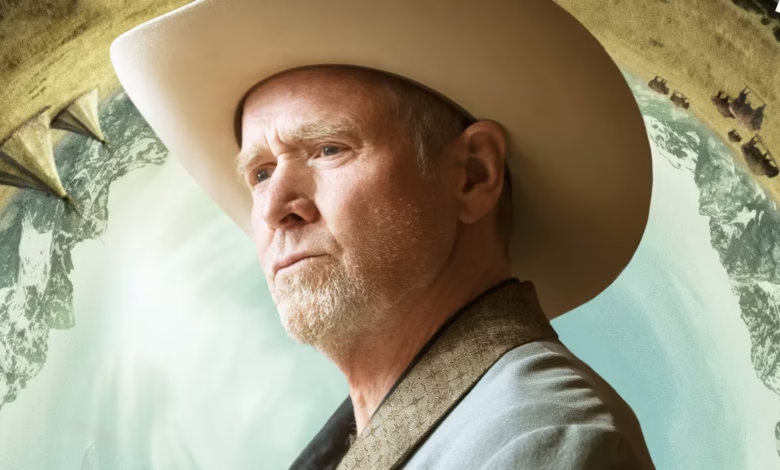
Will Patton is an American actor whose career spans over four decades, marked by a remarkable range of roles in film, television, and theater. His presence on screen carries a distinct intensity, lending depth to characters that stay with audiences long after the credits roll. From early supporting roles in major Hollywood productions to acclaimed performances on stage, Patton’s work reflects a steadfast dedication to his craft and a versatility that few actors achieve.


Early Life and the Making of an Actor
Will Patton was born William Rankin Patton on June 14, 1954, in Charleston, South Carolina. He grew up in a household deeply connected to both art and community. His father was a Lutheran minister and playwright, which exposed him to the world of storytelling and performance from an early age. This upbringing helped foster a curiosity about human nature and narrative that would later define his acting career.
Patton pursued formal acting studies at the North Carolina School of the Arts, where he honed his talent and learned the technical foundations of performance. He continued his training at the legendary Actors Studio in New York, a proving ground for many great performers. His early dedication to theater laid a strong groundwork for the nuanced roles he would later inhabit on screen.
A Foundation in Theater
Theater was central to Patton’s development as an actor. In the early years of his career, he took on challenging roles that demanded emotional depth and physical presence. His work in off-Broadway productions earned him critical acclaim, including two Obie Awards for Best Actor for his performances in Fool for Love and What Did He See? These honors established him as not just a screen actor, but a serious stage performer capable of commanding complex material with precision and passion.
Patton’s theater experience cultivated a discipline that would serve him throughout his varied career. His ability to connect with audiences live on stage translated seamlessly to film and television, giving his on-screen performances a grounded, authentic quality that directors and casting agents found appealing.
A Rising Presence in Film and Television
Will Patton’s transition from theater to film began in the early 1980s. One of his first screen appearances was in Silkwood (1983), a role that signaled his potential in Hollywood. Not long after, he landed parts in films like Desperately Seeking Susan (1985), where his presence captured attention among audiences and critics alike.
His breakthrough came with more dramatic, complex roles. In No Way Out (1987), Patton played Scott Pritchard, a performance that brought him into the spotlight and led to further opportunities in major films. He reunited with that early success when he appeared opposite Kevin Costner in The Postman (1997), showcasing his ability to hold his own alongside some of the biggest names in the industry.
Memorable Film Roles
Throughout the 1990s and 2000s, Patton appeared in a variety of genres, demonstrating his versatility as an actor. In Armageddon (1998), he took on action elements, portraying characters in high-stakes situations with a steady command. Films such as Remember the Titans (2000) saw him contributing to emotionally rich narratives, embracing the challenges of portraying real human experiences with truth and sensitivity.
He continued to diversify his work with appearances in films like Gone in 60 Seconds (2000), The Punisher (2004), and American Honey (2016). These roles highlighted his range, moving from action and drama to independent cinema that explored the subtleties of character and storytelling.
Television and Sci-Fi Legacy
On the small screen, Patton brought a similar intensity to various roles. One of his most recognized television performances was as Colonel Dan Weaver in the TNT science fiction series Falling Skies, which aired from 2011 to 2015. In this role, he portrayed a military leader navigating the emotional and physical trials of an alien invasion, allowing him to blend action with heartfelt character development.
Patton’s television work extends beyond science fiction. He has appeared in series such as Yellowstone and Silo, where his ability to adapt to different settings and characters continued to earn praise. These appearances underline his enduring presence in the industry and his readiness to take on roles that challenge both actor and audience.
Impact Across Genres
What sets Patton apart is his ability to shift between genres with ease. He has taken on horror franchises like Halloween, playing Officer Frank Hawkins in multiple installments, and he has embraced roles in drama, thriller, and science fiction. This range speaks to his commitment to storytelling in all its forms and his eagerness to explore new cinematic landscapes.
His voice has also become notable through audiobook narration, where he has brought literary works to life with the same compelling presence he brings to the screen. This lesser-known facet of his career further highlights his versatility and depth as a performer.
Behind the Scenes: Craft and Character
Few aspects of Patton’s career are accidental. His long tenure in film and theater is rooted in a dedication to craft. He approaches each role with a keen understanding of character motivations, emotional truth, and narrative context. This allows him to breathe life into roles that might otherwise be overlooked or underestimated.
Colleagues and directors have noted his transformative ability to elevate material, often making secondary characters as memorable as leads through sheer presence and nuance. His work ethic and professionalism have made him a reliable and respected figure in an industry known for its volatility.
Mentorship and Influence
Throughout his career, Patton has worked alongside multiple generations of actors, contributing to the collaborative environment of film and television. His sustained presence in the industry serves as both an inspiration and a model for younger performers. He demonstrates that longevity in entertainment comes not only from talent but from resilience, adaptability, and a willingness to engage deeply with every role.
Recent Work and Ongoing Contributions
In recent years, Patton has continued to act in films that resonate with audiences and critics alike. His performance in Minari (2020), a poignant drama about an immigrant family pursuing the American dream, earned ensemble recognition at awards ceremonies, reaffirming his place in compelling, character-driven cinema.
He also appears in large-scale projects like Horizon: An American Saga, a Western epic that showcases Patton’s continued relevance in both independent and major studio settings. His ability to adapt to new generations of filmmaking while staying true to his craft is a testament to his enduring artistry.
Continued Exploration
As his career evolves, Patton’s roles grow increasingly diverse. Whether he’s portraying historical figures, intense dramatic confrontations, or leading a team of survivors in speculative worlds, his approach remains rooted in authenticity and emotional resonance. This consistency makes him a compelling actor to watch, no matter the genre or format.
A Legacy Beyond the Screen
Will Patton’s legacy is one characterized by versatility, depth, and a commitment to storytelling that spans mediums. He has carved out a niche for himself as a dependable and imaginative performer, capable of elevating every production he touches. His work reminds audiences and fellow actors alike that performance is not just about presence but about truth, empathy, and the human connection that lies at the heart of every great role.
Conclusion
Over the course of his career, Will Patton has demonstrated an extraordinary ability to evolve while remaining true to the essence of authentic performance. From theater stages to blockbuster films and acclaimed television series, he has enriched the fabric of American acting with roles that are as memorable as they are nuanced. Through decades of work, he has proven that enduring artistry comes from a blend of talent, dedication, and a deep respect for the craft of storytelling.